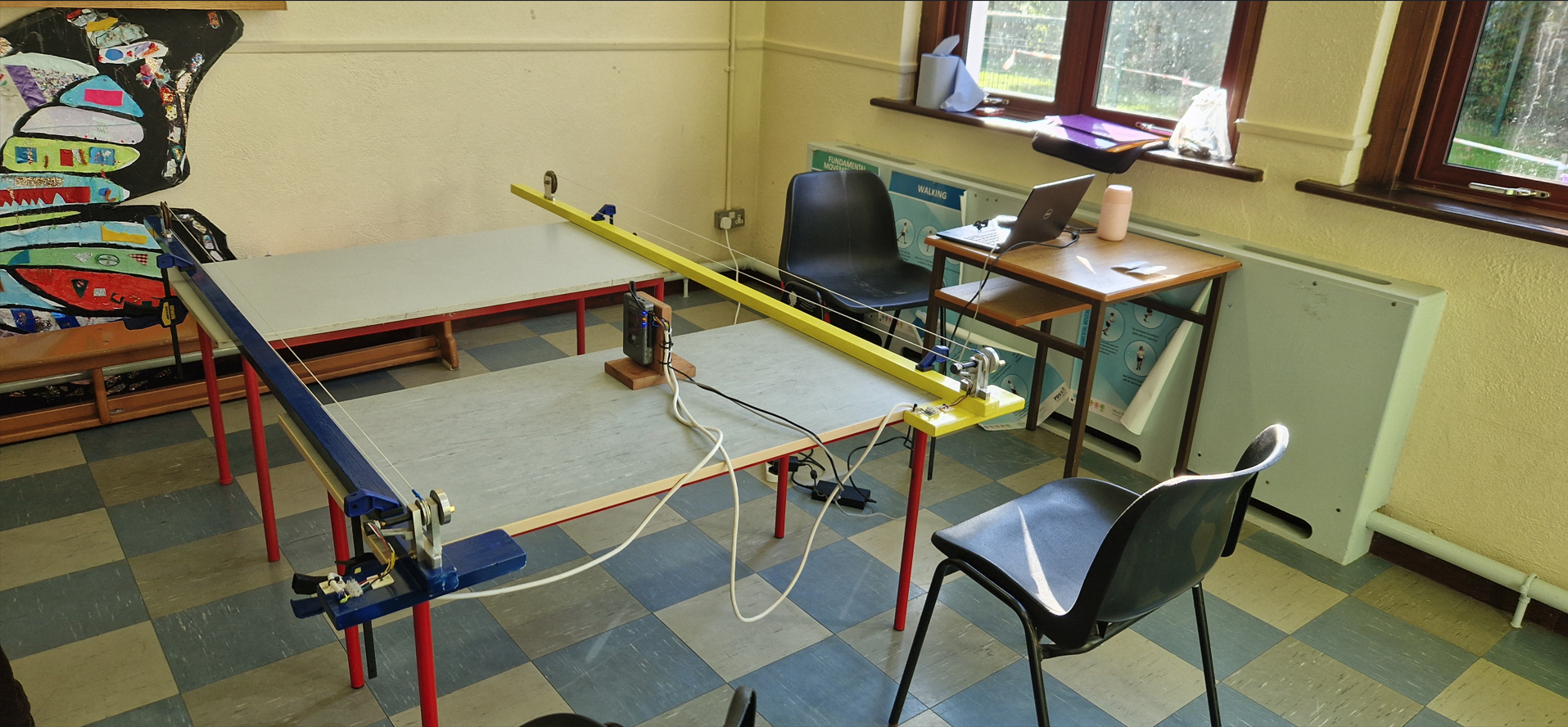
A replication of Triplett’s ‘social facilitation experiment’
A seminal study by Triplett provided initial evidence for the social facilitation effect, and over the last century, research has demonstrated this effect across a range of settings. However, despite the importance attributed to Triplett’s study, no research has replicated the original study paradigm. Furthermore, in the context of research advances and methodological rigour, some elements of the original study weaken the validity of the observed findings. We address these critical limitations and replicate the original study, employing a standardized study protocol to minimize potential confounds, such as practice effects. This research reports on 445 school-aged children (Mage = 10.8, SD = 1.3) who completed the study. As pre-registered in our Stage 1 submission, using a purpose-built apparatus, participants turned a crank to move a marker along a string course between two pulleys. Pairs of participants completed this task four times, twice alone and twice together. Trial order was standardized and balanced to control for possible order/practice effects. In line with Triplett’s original study, we show that participants completed the task faster in the together condition than in the alone condition. We also show interesting variability depending on age and gender, as well as demonstrating “carryover” effects. Thus, we replicate and extend this classic finding, adding to the literature on social facilitation/competitive coaction. In addition, the materials and methods developed here provide a template for future studies to further examine this phenomenon.